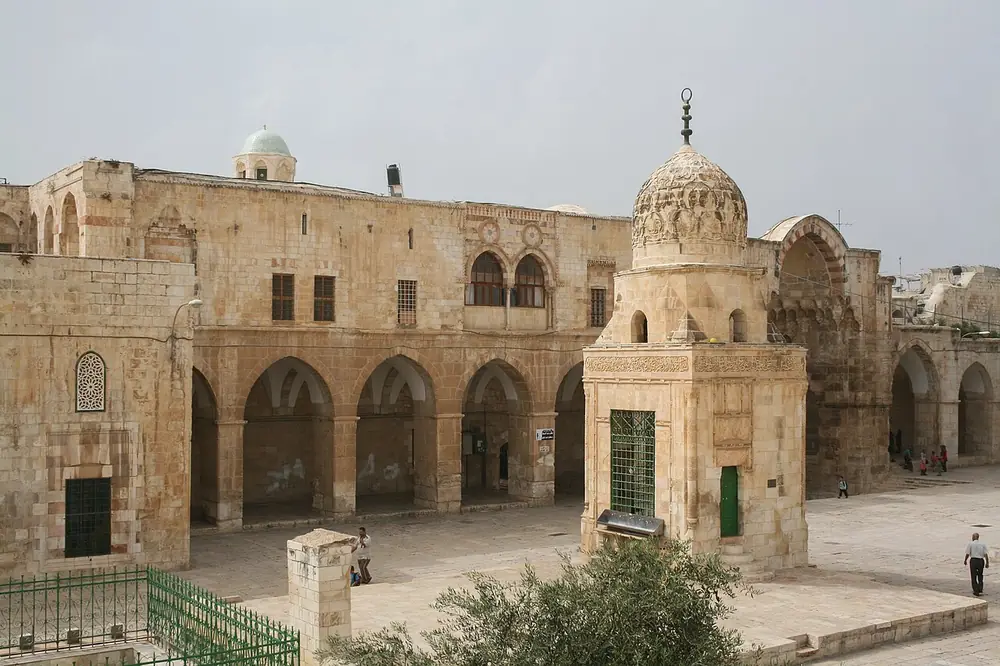
Qaytbay fountain and its raised prayer platform, an example of the precinct’s open-air prayer areas.Photograph · 2011
Diego Delso·CC BY-SA 3.0· Resized and converted to WebP for the web; cropped in cards. Original image license retained.
Overview
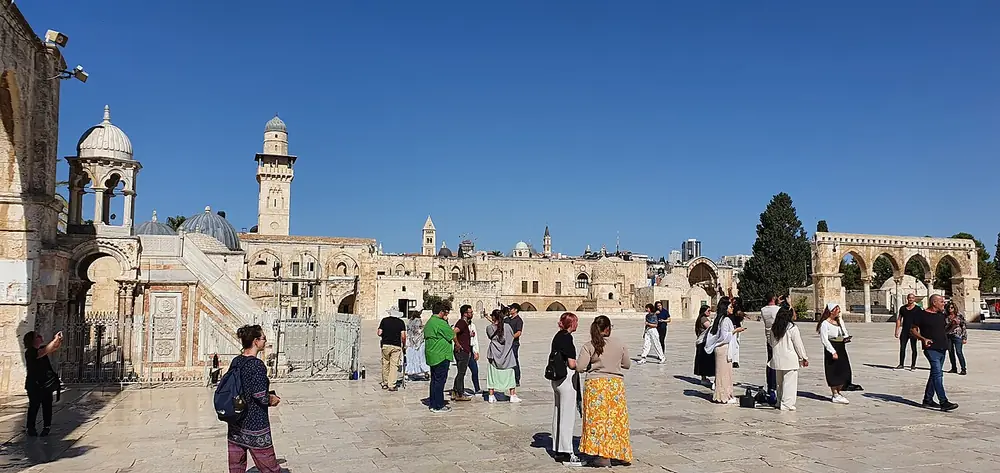
Low platforms and outdoor prayer niches give the open courtyards their own architectural detail. [3][1][2]
The masatib are smaller raised spaces within the courtyards. Some have a mihrab or stand beside a fountain; their names may refer to a neighboring dome, gate, patron or group of trees. [3][1][2]
Their histories are individual. The Suleiman platform is linked with an Ottoman fountain, the Buraq platform with the nearby prayer chamber, and the Pine platform with its trees. They should not be mistaken for the much larger raised terrace of the Dome of the Rock. [1][2][3]
Details & spaces
Explore the named elements associated with this place.
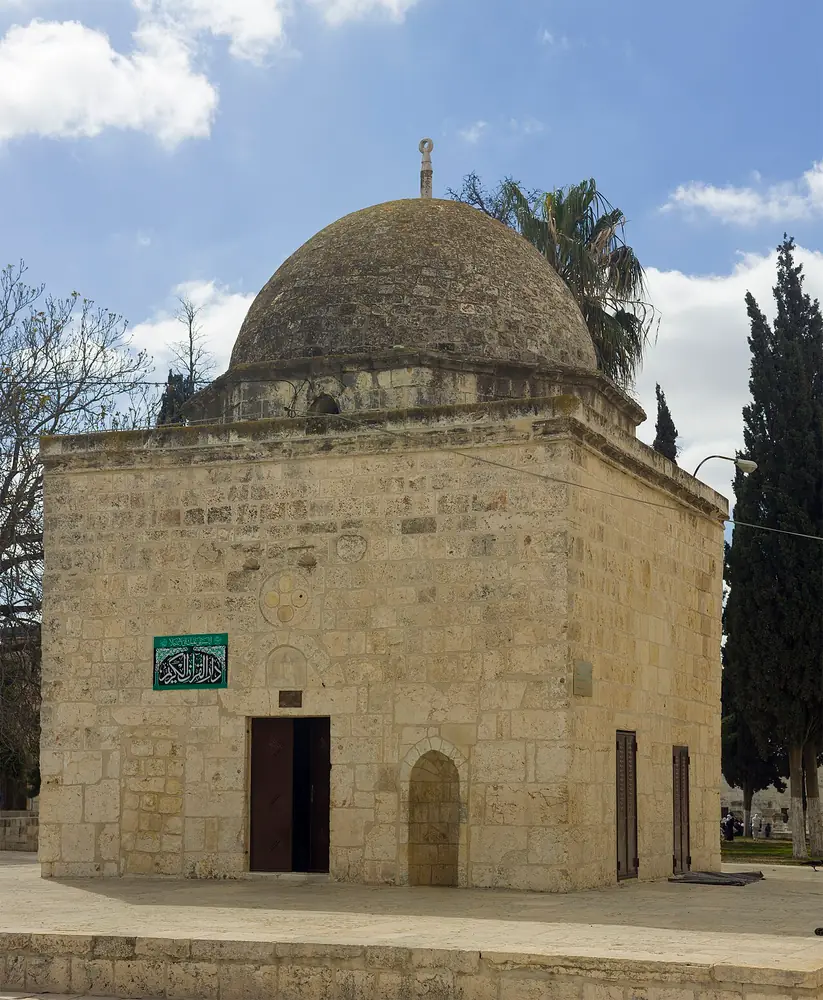
Musa Platform
مصطبة موسى
The platform carrying the Dome of Musa, between Chain Gate and the Grammarians’ Dome. [7]
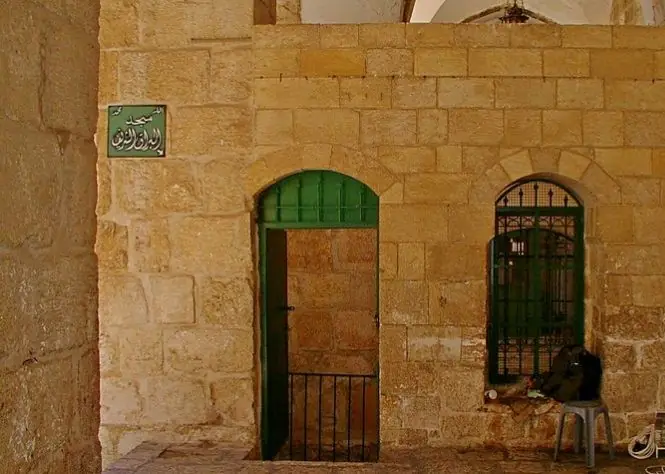
Buraq / Abu Bakr Platform
مصطبة البراق
An Ottoman platform east of the Buraq prayer hall, near Maghariba Gate, with a stone mihrab. [1]
Suleiman Platform
مصطبة سبيل سليمان
A platform southeast of Faisal Gate, dated by Awqaf to 1536. Its southern mihrab faces the fountain on the other side. [2]
Pine Platform
مصطبة الصنوبر
North of the Dome of Yusuf Agha, this platform is named for the pines around it and has a mihrab built into a small wall. [3]
Al-Tin Platform
مصطبة الطين
West of the southwestern arcade and south of Sabil Qasim Pasha. Awqaf dates it to 1760 and records a stone mihrab. [4]
Iron Gate Platform
مصطبة الحديد
A platform by the Iron Gate area, recorded by Awqaf as Ottoman and associated with an iron mihrab. [5]
PASSIA · Jerusalem Awqaf · Hashemite Fund · Printed pp. 54–65; map legend on PDF page 35
Consulted 2026-10-13
Custodial guide from an Islamic perspective. Used for the baseline inventory and schematic relative positions; its access descriptions are historical, not live advice.
Jerusalem Awqaf · monument record (Arabic) · Location, history, naming and architectural description
Consulted 2026-10-13
A custodial record. Religious associations are attributed; historical operating details are not current access information.
About this record
Relative positions are illustrative; this is a heritage atlas, not a walking route or live access map.
This distributed family is listed without a single geographical point. The named examples introduce the platform system rather than claim an exhaustive survey of every courtyard slab.