Back to Explore

Domes · The raised platform

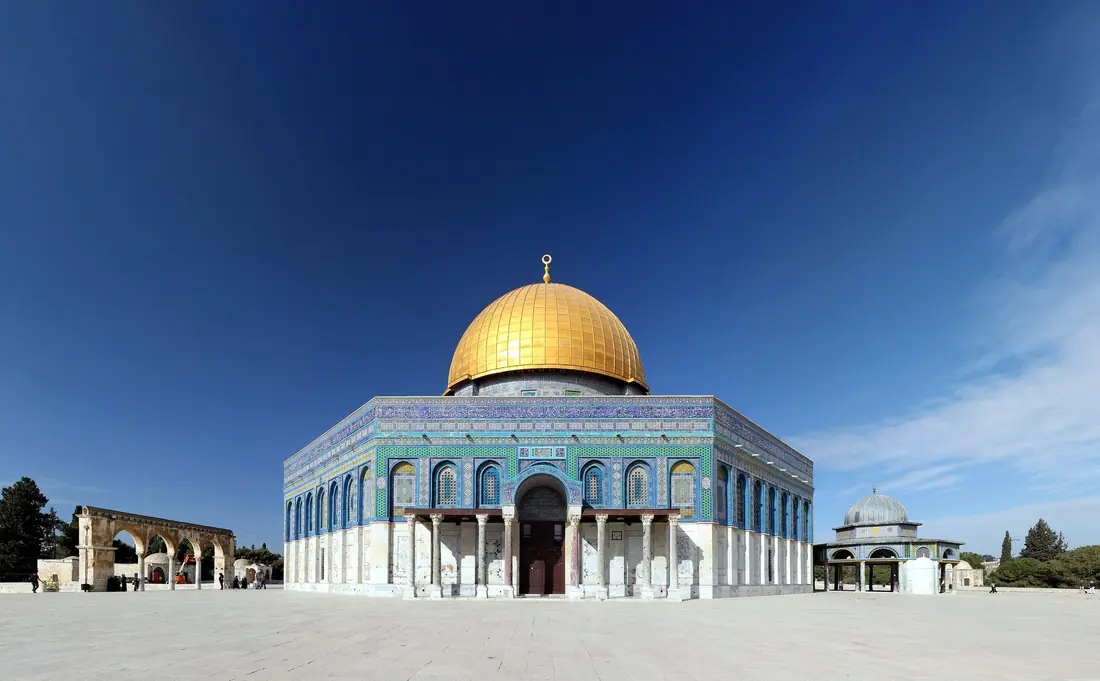
Dome of the Rock

قبة الصخرة
View on map
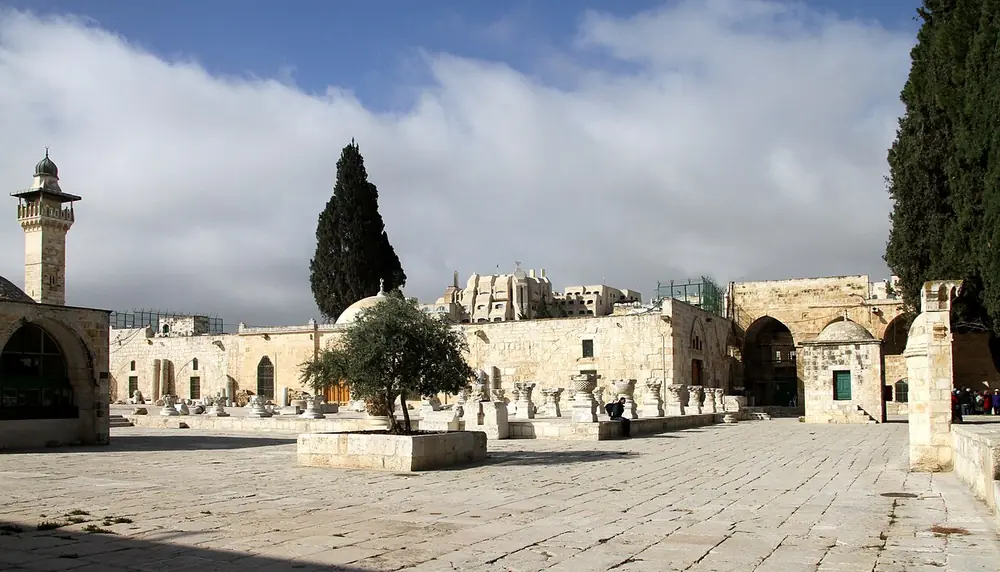
Dome of the Rock in the Al-Aqsa sanctuary
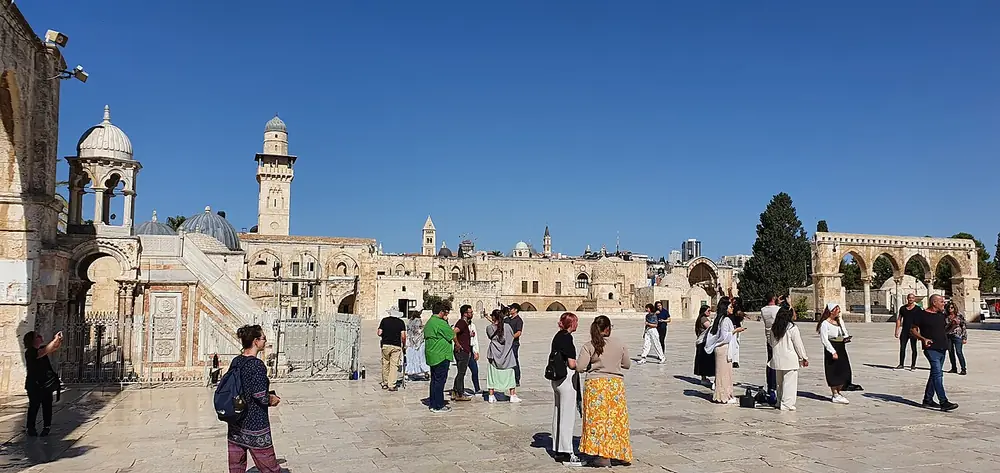
The raised platform
Askii / Wikimedia Commons·CC BY-SA 3.0· Resized and converted to WebP for the web; cropped in cards. Original image license retained.

Overview

The golden dome at the heart of the sanctuary, known for its rich geometric and floral decoration. [3]

Commissioned by the Umayyad caliph Abd al-Malik and completed in 691–92, the Dome of the Rock encloses the rock within an octagonal building on the sanctuary’s raised platform. [3]

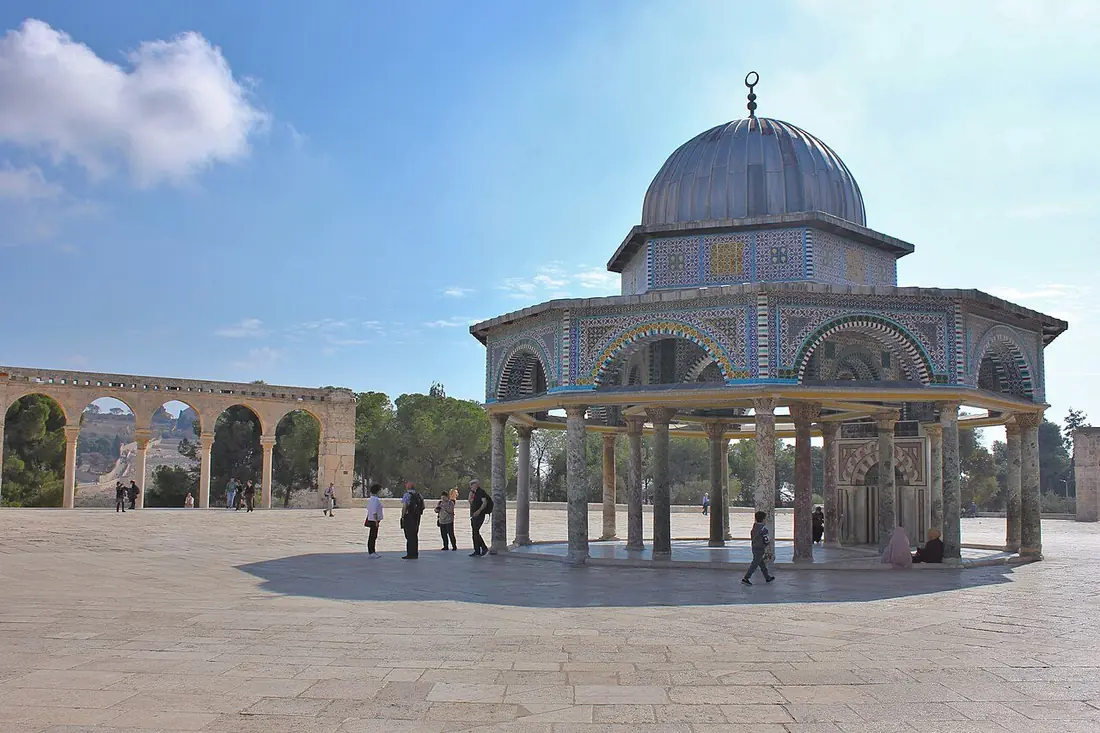
Its interior mosaics combine plant forms, jewels and inscriptions. Their technique and imagery show connections with Byzantine and Sasanian art. The exterior tiles belong to later restoration history, including Sultan Suleiman’s Ottoman programme. [3]

Muslim tradition associates the rock with the Prophet Muhammad’s Ascension. The religious association and the date of the surviving monument should be understood separately. A tile preserved in the Islamic Museum offers another way to study the building’s later changes. [3][4]
Sources & provenance

References for this place, with links from the statements they support. Dates and religious traditions retain the attribution of their sources.

  1. 1
    Old City of Jerusalem and its Walls

    UNESCO World Heritage Centre

    Consulted 2026-09-14
  2. 2
    A Guide to Al-Aqsa Mosque / Al-Haram Ash-Sharif

    PASSIA · Monument entries and map legend

    Consulted 2026-09-14

    Used for relative positions only. The product diagram is schematic, not a surveyed plan.

  3. 3
    The Dome of the Rock · Ana Botchkareva

    The Metropolitan Museum of Art · Foundation, mosaics and later changes

    Consulted 2026-10-13
  4. 4
    Tile from ceramic inscription panel of the Dome of the Rock · Nazmi al-Ju’beh

    Museum With No Frontiers · Object description and original owner

    Consulted 2026-10-13
About this record

Relative positions remain illustrative, not surveyed coordinates.

Related places

Back to Explore