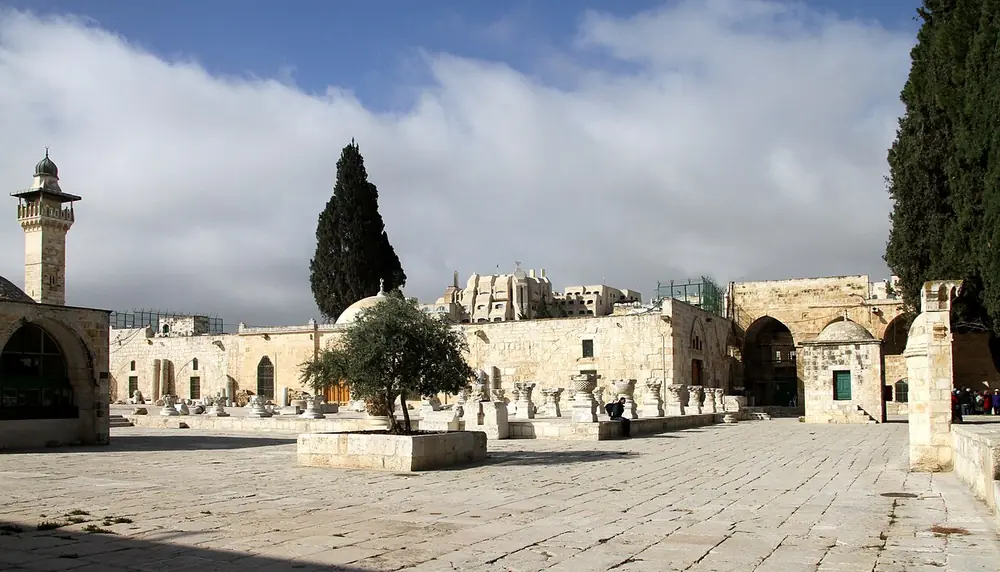
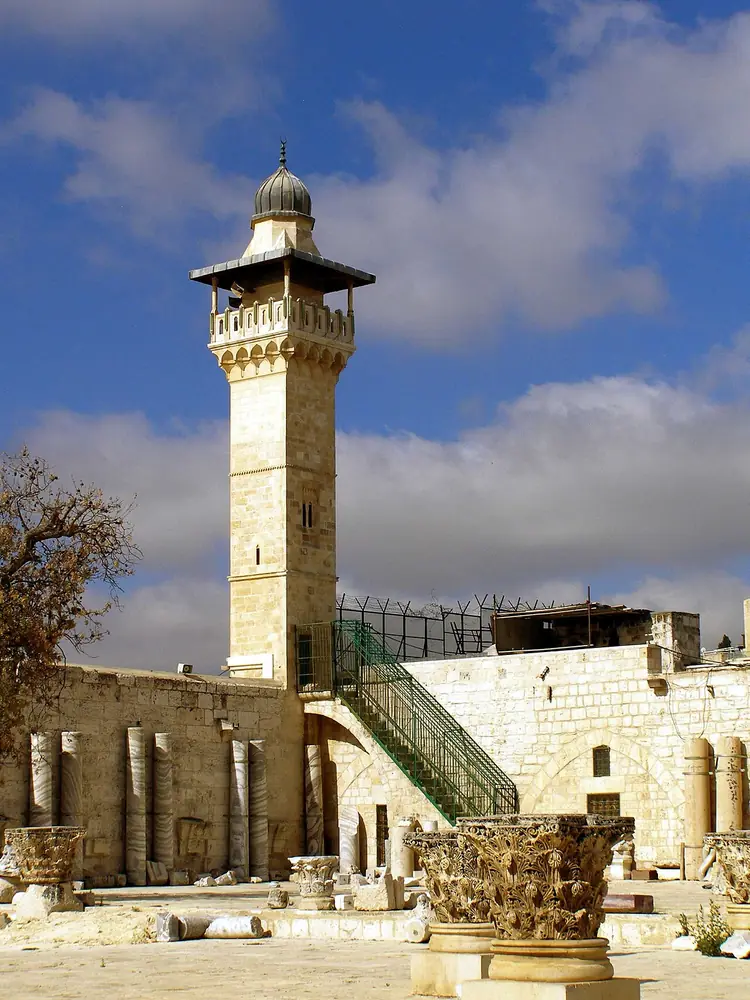
Courtyard beside the Islamic Museum, with stone capitals, the Fakhriyya Minaret at left and the Dome of Yusuf Agha at right.Photograph · 2010-03-03 07:52:00
Gerd Eichmann·CC BY-SA 4.0· Resized and converted to WebP for the web; cropped in cards. Original image license retained.
Overview
Architectural fragments, manuscripts and objects preserve the sanctuary’s material history. [1]
The museum’s own partner account records its inauguration in 1922 and move to the southwestern corner in 1929. Its buildings contain earlier layers, including a medieval hall, the former Maghariba Mosque and the Fakhriyya area. [1]
The collections include architectural woodwork, metalwork, ceramics, textiles and manuscripts. Objects once installed in the sanctuary help connect a building’s changing appearance with surviving material evidence. [1]
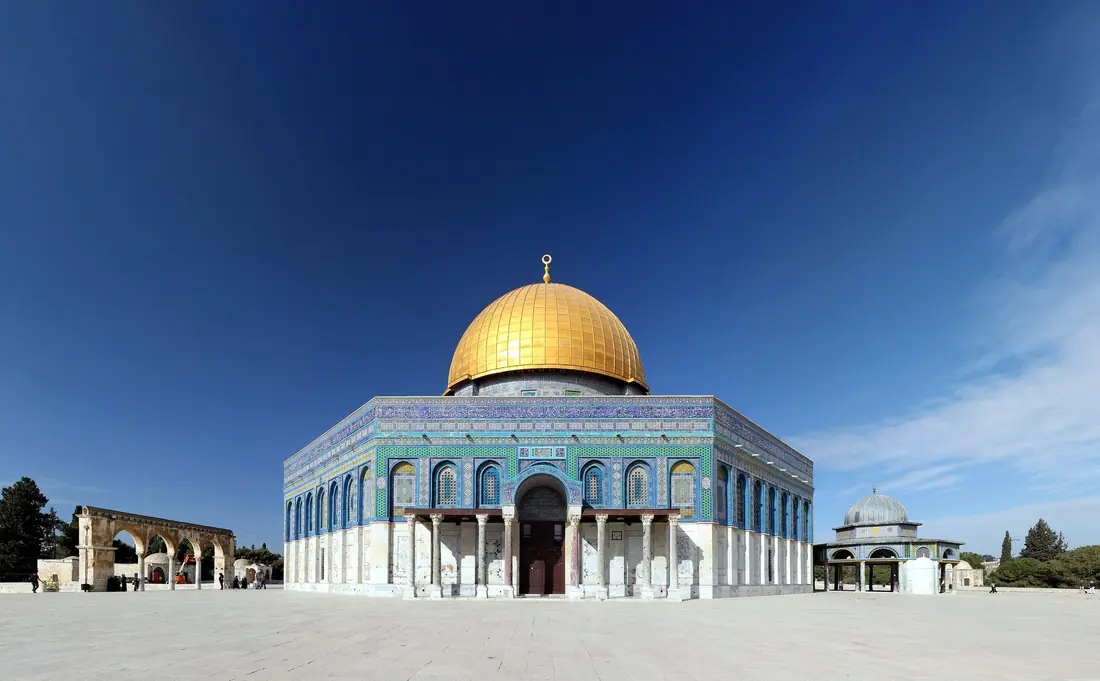
One catalogued example is a tile from an Ottoman Qur’anic inscription panel formerly on the Dome of the Rock. Such objects can be studied in the museum catalogue even when physical viewing arrangements are unknown. [2]
Details & spaces
Explore the named elements associated with this place.
Former Maghariba Mosque
جامع المغاربة
A former mosque incorporated into the museum complex. The museum account identifies the hall as Ayyubid; it is a building component, not a second independent museum. [1]
Former Women’s Mosque
مسجد النساء
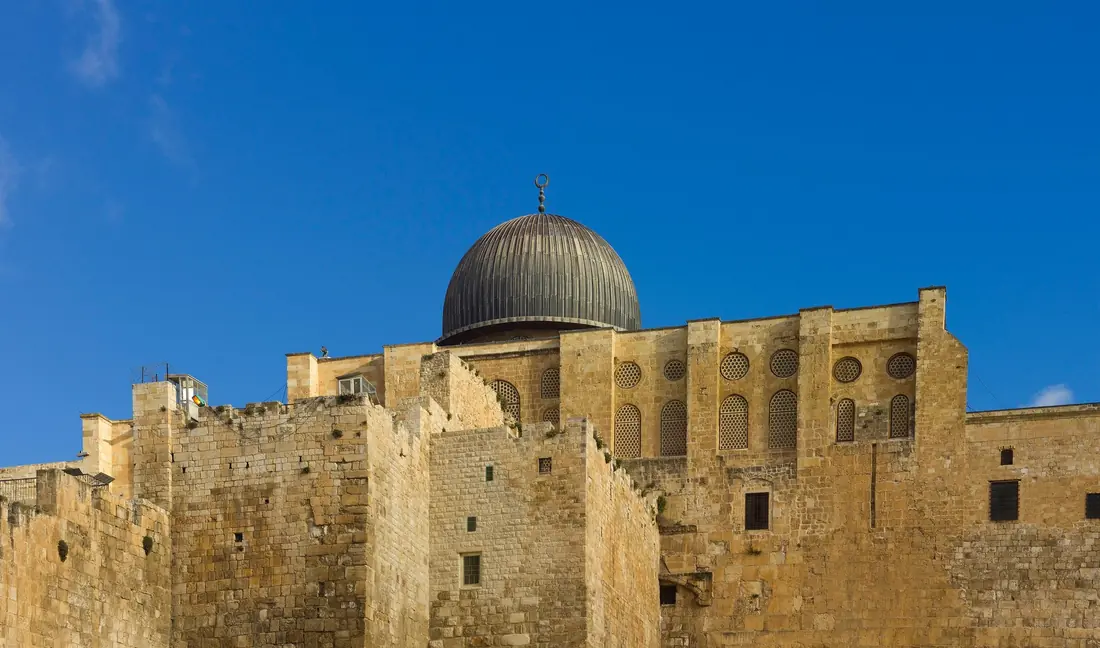
The historic hall west of Al-Qibli has been used for museum and library functions. Its historical name is retained to identify the building, without implying present gender-based access rules. [4][3]
PASSIA · Jerusalem Awqaf · Hashemite Fund · Printed pp. 54–65; map legend on PDF page 35
Consulted 2026-10-13
Custodial guide from an Islamic perspective. Used for the baseline inventory and schematic relative positions; its access descriptions are historical, not live advice.
About this record
Relative positions are illustrative; this is a heritage atlas, not a walking route or live access map.